
Fixing Screen Flickering and Audio Dropouts: Is Your HDMI Cable to Blame?
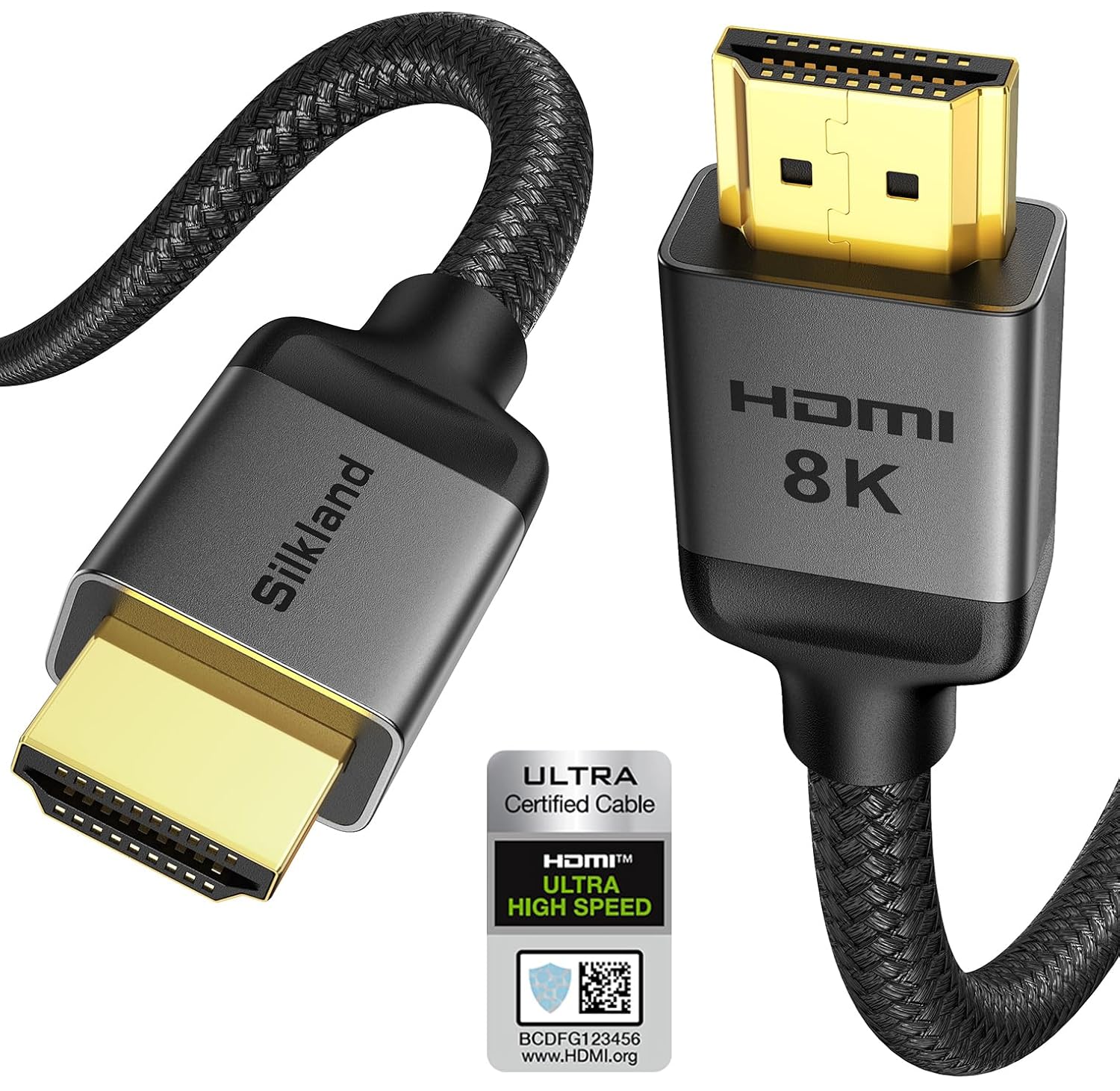
Experiencing screen flickering, blackouts, or audio drops on your PS5, Xbox Series X, or 4K/8K TV? Discover how to diagnose HDMI signal failures and why upgrading to the Silkland Certified Upgrade Compatible TV 6 6ft HDMI 2.1 cable can restore flawless performance.
🔥 Hot Deal
Check the latest price and availability on Amazon.
You sit down to play your favorite next-gen console or watch a 4K HDR movie, only to be greeted by a blinking black screen, jarring audio cutouts, or a display capped at a sluggish 60Hz. It is a highly frustrating experience that plagues modern home entertainment setups.
Often, gamers and home theater enthusiasts assume their expensive TV or gaming console is defective. However, the true culprit is almost always hidden in plain sight: an outdated, uncertified, or degraded HDMI cable that simply cannot handle the immense bandwidth required by modern AV standards.


The Root Cause: Why Standard Cables Fail on Modern Displays
Modern gaming consoles like the PlayStation 5, Xbox Series X, and high-end PC graphics cards output massive amounts of data. To achieve resolutions like 4K at 120Hz or even 8K at 60Hz, your system must transmit up to 48 Gigabits of data per second (Gbps).
Older HDMI 2.0 cables are strictly capped at 18Gbps. When you force an 18Gbps cable to transmit a 48Gbps signal, you will experience:
- Screen Flickering and Blackouts: The display repeatedly loses handshakes with the source device.
- Audio Dropouts: Advanced formats like Dolby Atmos or DTS:X require eARC (Enhanced Audio Return Channel) bandwidth, which older cables cannot reliably carry.
- Visual Artifacts: White sparkles or pixelated lines run across the screen due to packet loss.
- Disabled Features: High Dynamic Range (HDR10+) or Variable Refresh Rate (VRR) may become greyed out in your system settings.
Step-by-Step Troubleshooting for HDMI Signal Issues
Before spending money on replacement hardware, follow these diagnostic steps to isolate the issue:
Step 1: Inspect and Clean the Physical Connections
Turn off your devices, unplug the HDMI cable from both ends, and inspect the gold contacts for dust or debris. Clean the ports with a blast of compressed air.
Step 2: Test Different Input Ports
Some TVs only support full HDMI 2.1 bandwidth on specific ports (typically labeled HDMI 1 or HDMI eARC). Refer to your television manual to ensure you are plugged into a high-bandwidth port.
Step 3: Lower the Output Settings
Go to your console or PC display settings and temporarily lower the output to 1080p at 60Hz with HDR turned off. If the screen flickering stops, your current cable lacks the bandwidth required for high-resolution output.
Step 4: Rule out Intermediary Devices
If your cable runs through a soundbar, receiver, or HDMI switcher, bypass it by plugging the source directly into the TV. If this fixes the issue, the intermediary device or one of the linking cables is the weak link.
The Permanent Fix: Upgrading to a Certified HDMI 2.1 Cable
If your troubleshooting points to a bottlenecked cable, upgrading to a officially certified Ultra High Speed cable is the only solution. The Silkland Certified Upgrade Compatible TV 6 6ft is specifically engineered to resolve these exact signal integrity problems.
Unlike standard generic cords, this cable is certified to deliver full 48Gbps bandwidth, making it fully compatible with HDMI 2.1 specifications. This includes seamless support for 4K@120Hz, 4K@240Hz, 8K@60Hz, HDR10+, eARC, Dolby Atmos, HDCP 2.3, and DTS:X.
Specs Comparison: Standard HDMI vs. Silkland Certified HDMI 2.1
| Feature | Generic Standard HDMI Cable | Silkland Certified HDMI 2.1 (6.6ft) |
|---|---|---|
| Bandwidth | Up to 18 Gbps | Up to 48 Gbps |
| Max Resolution | 4K @ 60Hz | 8K @ 60Hz / 4K @ 240Hz |
| eARC Support | Limited / Compressed | Full Uncompressed (Dolby Atmos) |
| Shielding | Basic PVC | Double-Braided Premium Shielding |
| HDCP Compliance | HDCP 2.2 | HDCP 2.3 |
When This Cable Will Help (and When It Won't)
When It WILL Help:
- You are getting a black screen or flickering when launching games in 4K at 120Hz.
- Your Dolby Atmos audio cut out periodically when using eARC soundbars.
- You want to future-proof your setup for 8K video or fast 144Hz/240Hz PC monitors.
- You need a highly durable, braided cable that resists wear, pet chewing, and tight bends.
When It WON'T Help:
- Physically Damaged TV Screens: If your television screen has internal bleeding or vertical colored lines caused by drop damage, a new cable cannot resolve physical hardware failure.
- Outdated Source Hardware: If your computer graphics card or media player physically lacks an HDMI 2.1 port, upgrading the cable will not magically enable 4K@120Hz features on that machine.
Ready to eliminate frustrating display flicker and unlock the true visual potential of your television? Check out the Silkland Certified Upgrade Compatible TV 6 6ft on Amazon to experience glitch-free, ultra-high-speed performance.
Actionable Checklist for Perfect HDMI Setup
- [ ] Verify Port Compatibility: Check that your TV's HDMI port supports HDMI 2.1 / eARC.
- [ ] Ensure Device Output is Enabled: Turn on "HDMI Ultra HD Deep Color" or "Input Signal Plus" in your TV's system menu.
- [ ] Upgrade the Cable: Swap out older cords for a certified 48Gbps cable like the Silkland Certified Upgrade Compatible TV 6 6ft.
- [ ] Configure Audio Settings: Set your console or player audio output to Bitstream/Pass-through to let your soundbar decode Dolby Atmos properly.
- [ ] Avoid Tight Bends: Ensure your cable is not pinched or bent at a sharp 90-degree angle behind your media console, as this can degrade internal silver/copper wiring over time.
Was this helpful?
No account required. Your browser cookie keeps your reaction.
Comments (0)
Loading…