
Why Expensive Swiss Watches Still Lose to Japanese Quartz in Accuracy
The paradox of the watch world: Why do Swiss masterpieces worth thousands of dollars lose accuracy compared to a Japanese quartz watch costing just a fraction? Discover the truth behind the technology and heritage value.
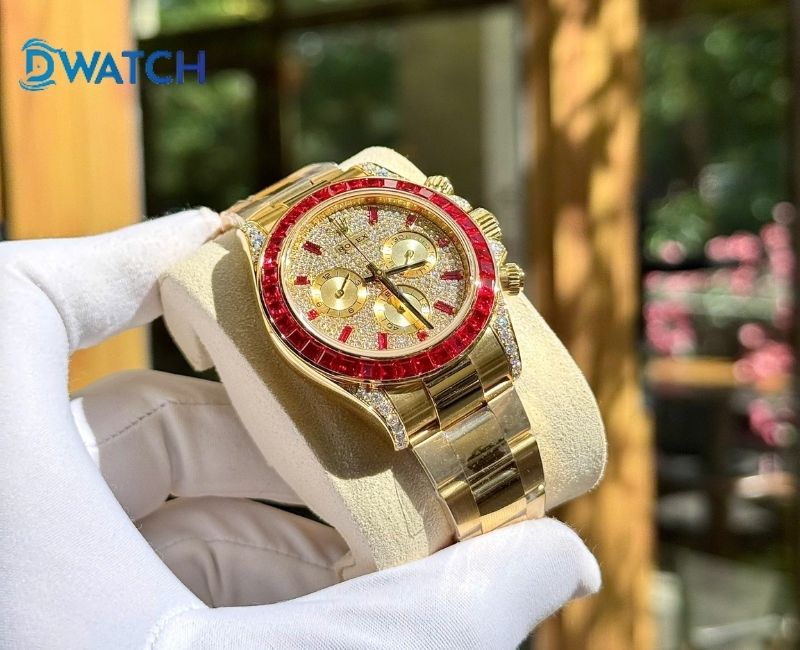
🔥 Hot Deal
Check the latest price and availability on Amazon.
In the world of timepieces, there is a paradox that surprises many watch beginners: A Rolex or Omega worth tens of thousands of dollars can run a few seconds off each day, while a Casio or Seiko Quartz costing the price of a dinner has almost absolute accuracy. Why do expensive Swiss watches still lose to Japanese quartz in accuracy? This article will provide a detailed analysis from both a technical perspective and brand value so you can have the most objective view.
1. The Nature of the Difference: Mechanical vs. Quartz
The core reason lies in the operating principle of the movement. Most high-end Swiss watch lines are mechanical (Automatic or Manual Wind). They work based on the release of energy from the mainspring through a gear train and escapement system.
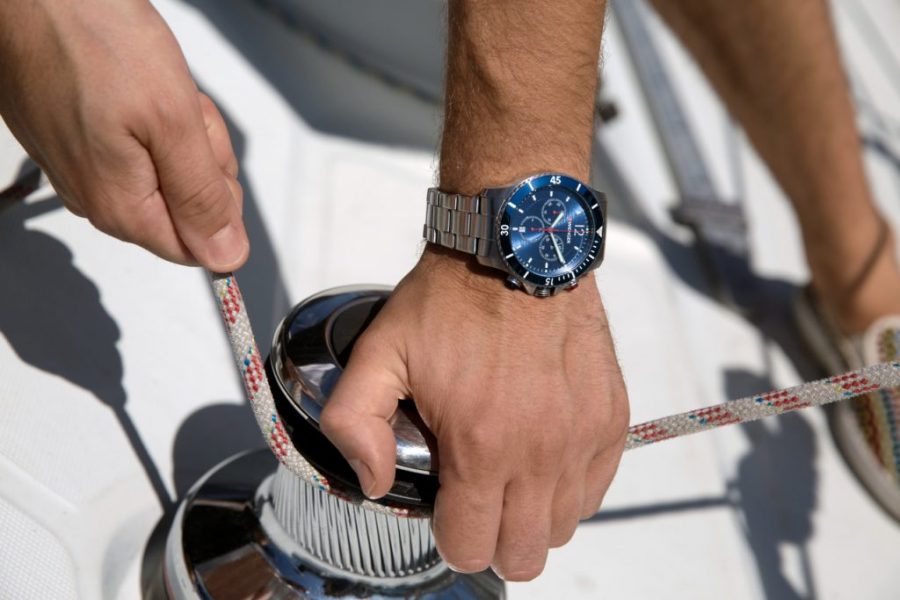
In contrast, Japanese Quartz watches use energy from a battery to send an electrical charge through a small quartz crystal. This crystal vibrates at an extremely stable frequency. The difference in vibration frequency is the key to accuracy.
- Swiss mechanical watches: Usually vibrate at a frequency of 4Hz (28,800 vibrations per hour).
- Japanese Quartz watches: Vibrate at a frequency of 32,768Hz.
The higher the frequency, the lower the error margin. This is the fundamental technical reason why quartz movements always hold an absolute advantage in terms of actual time display.
2. Impact of Environment and Gravity
Swiss mechanical watches are an assembly of hundreds of tiny metal parts. Therefore, they are extremely sensitive to external factors such:
- Gravity: The position of the watch (face up, face down, tilted) affects the hairspring and balance wheel.
- Temperature: Metal expands and contracts with temperature, changing the length of the hairspring.
- Magnetic fields: Electronic devices can magnetize the mechanical movement, causing large errors.
Japanese Quartz watches with their electronic circuit and quartz crystal structure are much less affected by these factors. A quartz watch can be tossed around or kept in harsh environments while maintaining a stable rhythm.
3. The Quartz Revolution and Switzerland's Transformation
In the 1970s, Japan (represented typically by Seiko) created the "Quartz Crisis". Mass production of high-accuracy watches at low prices almost destroyed the Swiss mechanical watch industry.
To survive, the Swiss changed their strategy. They no longer raced for absolute accuracy against electronic computers. Instead, they turned the watch into a work of art, a symbol of status and sophisticated craftsmanship.
4. Detailed Comparison Table: Swiss (Mechanical) vs. Japanese (Quartz)
| Criteria | Swiss Watch (High-end Mechanical) | Japanese Quartz Watch |
|---|---|---|
| Accuracy | Error of +/- 2 to 6 seconds per day | Error of +/- 15 seconds per month |
| Power source | Mainspring (manual winding or automatic movement) | Battery or light energy |
| Price | From a few thousand to millions of USD | From a few hundred thousand to tens of millions of VND |
| Maintenance | Requires periodic oiling every 3-5 years | Battery replacement every 2-5 years |
| Collectible value | Very high, may appreciate over time | Low, mainly utility value |
If you are looking for the best deals on both watch lines, check out Săn deal đồng hồ chính hãng so you don't miss major discounts.
5. Why Do People Still Spend a Fortune on Swiss Watches?
If it's just for telling time, Swiss watches are clearly a less economical choice. However, their value lies in points that Japanese Quartz cannot replace:
1. Finishing craftsmanship: Every screw and gear is hand-polished under a microscope. 2. Heritage: Owning a Patek Philippe or Vacheron Constantin means owning a piece of human history. 3. Complications: Features like Tourbillon, Perpetual Calendar, or Minute Repeater are the pinnacle of human intellect. 4. Emotion: The ticking sound of a mechanical watch brings vibrancy, like a real heartbeat on the wrist.
6. Frequently Asked Questions (FAQ)
Do Swiss watches have Quartz lines?
Yes. Brands like Longines, Tissot, or even Rolex (in the past) have Quartz movements. However, their greatest strength remains mechanical movements.
Are Japanese mechanical watches (Seiko, Citizen) good?
Japanese mechanical movements are famous for durability and practicality. Although the finishing may not be as sleek as Swiss watches in the ultra-high price segment, they are rugged workhorses.
How much error is acceptable for a mechanical watch?
If the watch achieves COSC (Contrôle Officiel Suisse des Chronomètres) certification, the allowable error is -4/+6 seconds per day. This is considered the gold standard of Swiss watches.
Conclusion: Which One Should You Choose?
Choosing between an expensive Swiss watch and a Japanese Quartz watch depends entirely on your purpose:
- Choose Japanese Quartz: If you prioritize absolute accuracy, convenience, durability, and a modest budget. This is the perfect choice for daily work.
- Choose Swiss Mechanical: If you value the art of watchmaking, want to assert your personal status, or want a valuable heirloom item.
Don't forget to check the latest promotions for both mechanical and quartz watches at: https://aichonhang.online/deals to choose your favorite product at the best price!
Was this helpful?
No account required. Your browser cookie keeps your reaction.
Comments (0)
Loading…